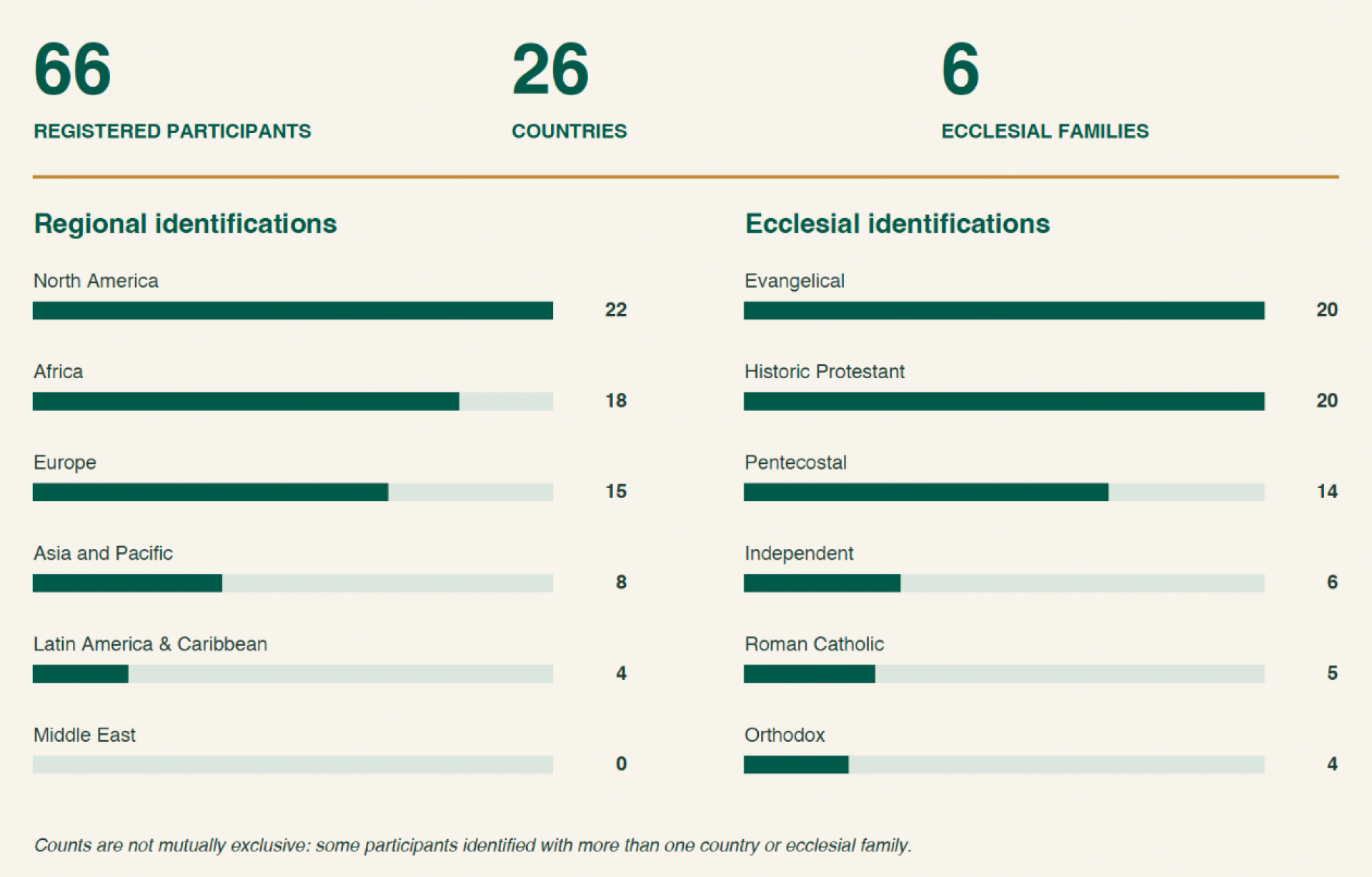
Program goals encouraged collaborative experience
The four-day program gave these goals a rhythm. Prayer and Bible study opened each day’s work by grounding the theme in Scripture and prayer. Themed plenaries, facilitated table
conversations, concurrent small group presentations, regional networking, and informal conversations offered participants different ways of engagement.
The first full day, “Reading the Signs of the Times,” gathered perspectives from panelists across six regions of the globe on “Global Changes in Theological Education: What
Is Shifting?” Participants had time to identify questions for the gathering, and facilitated discussions helped to deepen these “Prospective and Retrospective Questions.”
The day concluded with a plenary centered on “African Voices in Theological Education: From Misleading Theologies to Life-Giving Faith—Theological Education and the Common
Good.”
The second day, “Learning Across Borders,” began with prayer and Bible study on “Pentecost and the Gift of Difference.” In a session on “Decentering the West:
Reimagining Theological Education Globally,” representatives from Asia and the Pacific, Europe, and Latin America and the Caribbean shared their perspectives on the theme, followed by a
plenary-wide conversation. Small-group conversations on “Practices that Give Life” drew attention to what theological educators were doing in their own settings, particularly in
the Philippines, Russia, and the Middle East. A plenary on “Building Bridges that Last” helped participants focus on work being done in Georgia, Kenya, and Australia. An evening
of regional networking gave participants opportunities to consider the implications of these many sites of life and work for theological education in other parts of the world.
The third day turned to “Forming for Bridge-Building.” A plenary on “The World Theological Education is Called to Serve” considered three sets of realities:
-
“A World in Conflict–marked by war, violence, migration, displacement, trauma, and humanitarian crises”
-
“A World in Fragments–characterized by polarization, nationalism, social division, and declining trust”
-
“A World in Transformation–shaped by artificial intelligence, technological innovation, demographic change, and rapid societal transformation”
A panel then took up the theme “Formative Theological Education for Bridge-Building.”
The program put those conversations side by side, giving participants a chance to connect the challenges their communities face with the habits and capacities their institutions seek to
cultivate.
The closing plenary, “Building Bridges Forward,” invited participants to share their learnings from the various sessions—the conference was designed for attendees to examine
their experiences and what they might learn through an intentionally collaborative process. The evening meeting brought the conference to a close through fellowship and worship under the
theme, “The Body of Christ—Many Members, One Fellowship.” This was followed by a cultural celebration with the Nairobi-based RAPALA Dance Ensemble.
Participants named seven emerging themes
During the closing plenary, participants named and affirmed a set of emerging themes that they believed theological educators around the world might engage intentionally, critically, and
humbly. These themes formed the basis of a conference statement that articulated a shared agenda and left room for participants to discern how it fit into their own contexts. The document
intentionally refused the temptation to summarize the entire conference, and it did not presume a consensus that had not yet been reached. Instead, it offered a provisional account
of what participants were hearing and saying: recurring themes, questions that deserve further attention, and directions that may provide a mandate for the continuing work of GFTE. These
included:
-
The landscape of theological education is changing unevenly. Shifts in church life, society, and technology affect schools differently, depending on their resources,
freedoms, and vulnerabilities.
-
The future requires a genuinely global conversation. Educators in many centers (multiple spaces) of Christian life can help frame the questions and shape what counts
as theological knowledge.
-
Learning across difference is itself theological formation. Encounters across cultures, languages, and traditions cultivate humility, hospitality, and a willingness
to be changed by others.
-
Partnership must move from transaction toward mutuality. Trust grows when partners share meaningful authority over priorities, resources, and decisions.
-
Life-giving theological education is contextual and formational. Theological study belongs alongside spiritual formation, communal life, ministry practice, and
engagement with local realities.
-
Theological education must prepare leaders for a fragmented world. Schools can form leaders who practice reconciliation, build peace, and sustain communities amid
conflict and displacement.
-
Emerging technologies require theological discernment. Artificial intelligence raises questions about human formation, knowledge, authority, creativity, access, and
justice.
Hospitality formed backbone of Nairobi gathering
The Nairobi conference depended on the local hospitality of the All Africa Conference of Churches and the Desmond Tutu Conference Centre, the work of the GFTE Executive Committee and its
Planning Committee, and the contributions of organizations and individuals, including: the Church of Pentecost—UK, Evangelische Mission Weltweit; Foundation for Theological
Education in Asia and the Pacific; Society of the Divine Word, Chicago Province; The Association of Theological Schools (ATS); and individual members of the GFTE Executive Committee.
ATS, a longstanding partner of GFTE, provided significant support and leadership through its Global Awareness and Engagement Initiative.
An invitation for continued discernment
The Nairobi gathering gave GFTE both an opportunity and a responsibility.
GFTE is committed to preserving the diversity of what has been heard rather than reduce it prematurely to a single global narrative. The unresolved questions, tensions, criticisms, and
minoritized perspectives voiced at the gathering are as important for GFTE’s continuing discernment as the themes around which broad agreement appears to be emerging.
GFTE envisions the work following Nairobi as a continuing process of listening, connecting, learning, and discernment. Its significance will be in the relationships strengthened,
assumptions reconsidered, questions pursued, collaborations begun, and practices transformed because of the awareness and engagement at the gathering.
As one participant noted, “Our theme has called us to build bridges, not walls. The continuing question is whether we will become the kind of community capable of doing so. Nairobi
does not give us the final word. It gives us work to continue—together.”
Brief history of GFTE gatherings
The first gathering in Dorfweil, Germany, in 2016, brought together 86 participants from 37 countries across six ecclesial traditions. In 2019, 64 participants from 29 countries met at the
Orthodox Academy of Crete to consider the vision and viability of theological learning and formation in their different contexts. Approximately 120 participants joined the 2021 virtual
gathering, this time hosted by ATS, which continued the globalizing conversations about the practices, contexts, and futures of theological education.
For additional information, please contact me at ruiz@ats.edu, or Layne Shaffer at shaffer@ats.edu.
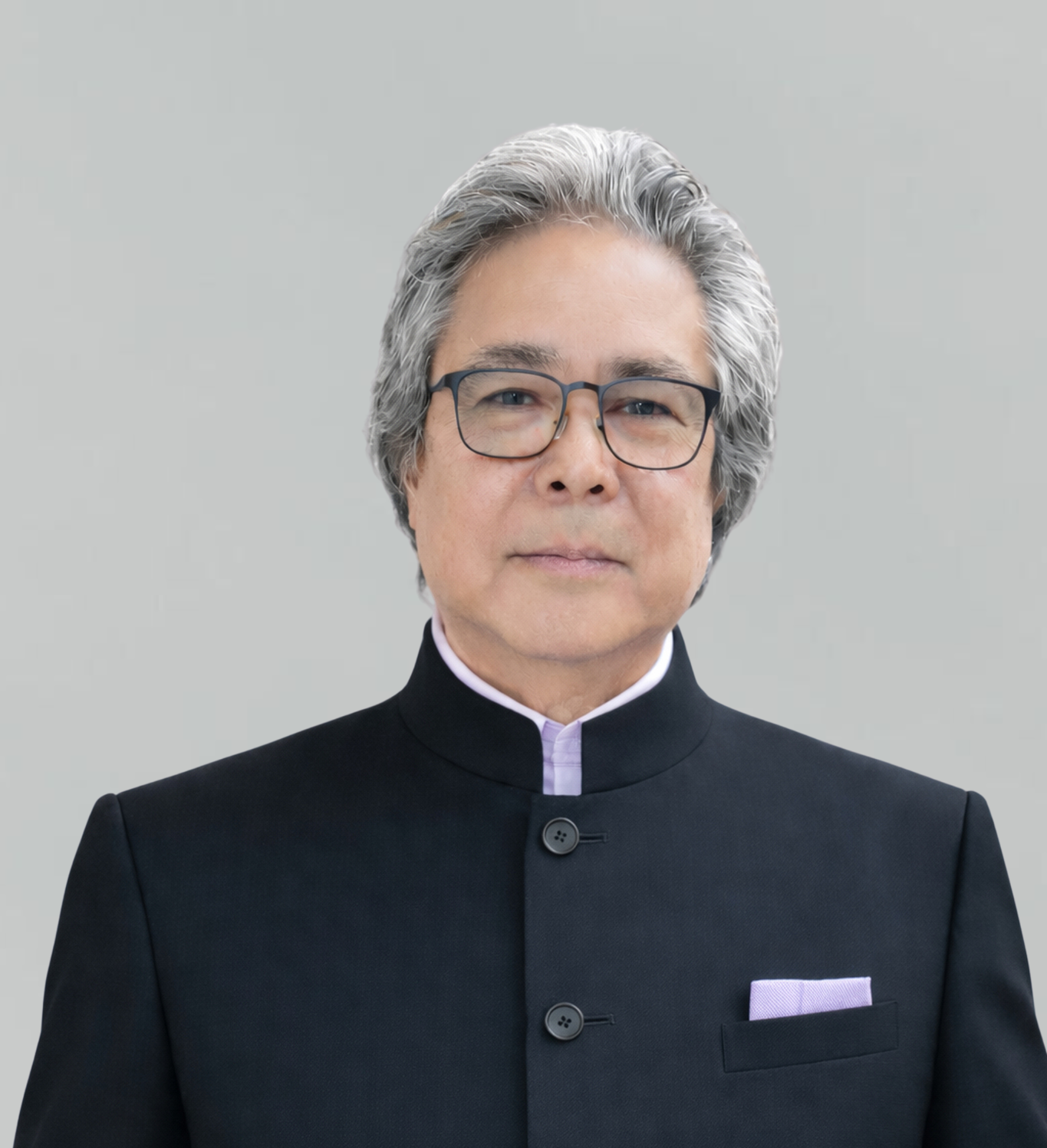
Lester Edwin J. Ruiz is director of global engagement
at The Association of Theological Schools
in Pittsburgh, Pennsylvania.



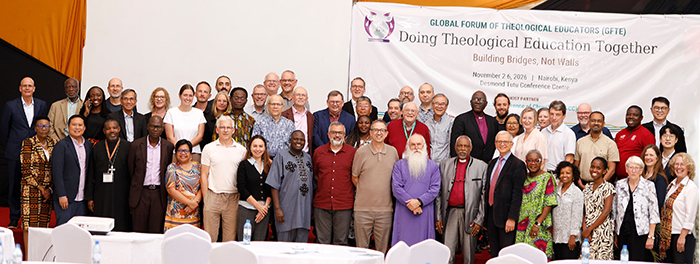 Doing theological education together in Nairobi