 Leading from logistics: reflections from our behind-the-scenes staff
By Chelsea Brooke Yarborough
“Everything ran so smoothly!”
“This was exactly the space I needed.”
“Thank you so much for choosing amazing food I could eat—I’m used to just having to order with my restrictions.”
“The staff was so hospitable—thank you for making me feel welcome.”
These are just some of the comments we hear repeatedly as program participants reflect on their time at ATS Leadership Development programs. A crucial element of this success is the role of
our Programs and Initiatives administrative staff. They take ownership of creating a space where our membership can come together and do the work that allows them to return to their
respective places feeling resourced and supported. The care and commitment of these staff members is deeply felt by participants.
While there are many roles and people who help make our programs possible, nothing happens without the hospitality, ingenuity, creative problem solving, organization, and implementation of
our programs and initiatives staff, both in preparation and on-site.
It would be easy to write beyond book-length about all of the administrative talent that contributes to the Leadership Development programming. But I thought it best to talk to relevant ATS
staff and ask about their experiences and contributions in making our portfolio possible. I wanted to hear how they see themselves and the ways they lead so that we can learn from their
perspective.
I interviewed Saren Williams, the program assistant for Leadership Development, who leads the bulk of our current portfolio; Monica Laughery, coordinator for initiatives and research, who has
worked on several Leadership Development groups during her tenure at ATS; Meghan Niskach, our conference coordinator, who handles all hotel contracts while also supporting the Leadership
Development portfolio with events; and Mary Boyle, administrative assistant for student data, who, in addition to her regular work, has supported Leadership Development events as well.
First, I asked, “What do you feel is the most important part of the work you do for events?”
“People should get to enjoy ease at the event and have someone who knows where they are going and connects with who they are. That’s my goal, to make the details clear,”
said Monica.
And that is what participants experience. Our Programs and Initiatives administrative staff make the space an easy one for attendees to learn, grow, and know that they belong. Their work
opens access and creates room for participants to enter and experience a program that feels supportive and grounded in deep care. Whether ensuring that the hotel and staff are working
together to make the space as welcoming as possible, fielding emails about registration, designing the hotel grid so that flow and simplicity are at the forefront, or fielding questions from
participants and staff on site, our team is committed to an exquisite experience for everyone who attends.
Mary responded, “I want to make sure that each individual feels heard, accommodated, and feels like they are a part of the ATS organization in whatever role they are in at their school.
At the program, my role is to make sure everyone feels acknowledged.”
The creation of a program does not stop with speakers and workshops. It also includes ensuring that participants know they are seen when they register, that their needs such as dietary
restrictions have been anticipated, and that this is a place where they can exhale and be supported when they are often so accustomed to supporting others.
In thinking about hotels, Meghan named negotiation as one of the crucial parts of her work. Negotiating with hotels to secure rates that support our membership as much as possible is a
way she creates access and opportunity.
We know that these contributions may sometimes be overlooked because they are behind the scenes, but as Saren reminds us, “They can make or break someone’s experience.” The
ability of these staff to catch the many small things that contribute to the larger experience of a program is a pillar of any successful event.
Second, what do you particularly enjoy about the work that you do?
I could sum up the collective answer in two words: connection and impact.
The highlight of the experience is acting as team with colleagues in the creation of these programs and with our members. The best teammates are able to honor one another’s strengths
and the role each member of the team plays in putting forth something of which we can collectively be proud.
Saren answered, “You get to see and remember people from year to year, and it's special to be able to recognize different people you get to know across time.”
Monica added, “Seeing the impact of our behind the scenes work as it comes to fruition, and witnessing the impact of the work we did
beforehand as we watch the program unfold on site.
There is a special gift in seeing all the threads—emails, site edits, and hotel contracts—come together in a lived and embodied experience that supports the work our member
schools do by supporting the people within them. This is the work and gift of these leaders.
Third, the mission of ATS is “To promote the improvement and enhancement of theological schools to the benefit of communities of faith and the
broader public.” How does your work contribute to that?
Saren’s words struck me: “I help to create the environment where people get to learn together. I am doing a lot of background work to help people gather well. This impacts the
leaders, which then impacts all the places they impact.”
In Leadership Development, our programs aim to offer leaders a space where they can problem solve, connect, and access resources. None of that can happen if there is no container to hold it.
Our Programs and Initiatives administrative staff create the container, manage the details, and troubleshoot when issues inevitably arise. The mission of ATS cannot be carried out if the
container is not created for communities to gather, consider what must be improved, and explore how things can be enhanced.
They also note their work is mission-aligned with ATS and with the hope for how we impact not only schools, but also the ways those schools impact the world. Indeed, when you impact leaders,
you impact the world.
I closed with this: What are you most proud of?
I knew there were so many things they could name, but I found it especially meaningful to hear their responses and to recognize how I have seen them put those values into action.
Saren: “For me, it’s the relationships I have been able to establish within ATS and with the participants who come back every year. They remember your name, your face. They will
email throughout the year.”
People light up when they see Saren and ask about her whereabouts when she has stepped away—her welcome and connection are a part of their experience in their community as
well.
Mary: “I am proud of all that I have learned in my tenure here.”
Mary’s posture toward learning opens a window of empathy into what needs to be present in a space for those with whom we interact to promote the possibility of learning and growing,
too. It gifts the space with openness and flexibility.
Meghan: “I am proud that I get to use my gifts and talents in this way—to help programs run seamlessly and watch the impact that makes.”
Meghan’s gifts make it possible for us to be in places that support programming and to move through a map created for flow, allowing members to focus on content rather than
logistics.
Monica: “I am most proud of my encouraging spirit and flexibility.”
Monica’s gifts ease the frustrations of anxious participants and make unforeseen problems seem like power pivots when they could have become disasters.
Gratitude for the brilliance behind the scenes
There are so many people who make our programs possible. From the genius of our steering committees to communications personnel, data and technology gurus, and director staff, our team does
its best work when we work together. Our Programs and Initiatives administrative staff are critical assets to that team. They make possible the things that might otherwise be forgotten
through their attention to detail and their prowess in implementation.
To all our administrative staff across ATS and throughout the membership, thank you for the work you do to lead from logistics and create a container where the magic of connection, care, and
growth can happen. You are appreciated, and our programs and attendance to mission are not merely better because of you—they are possible because of you.
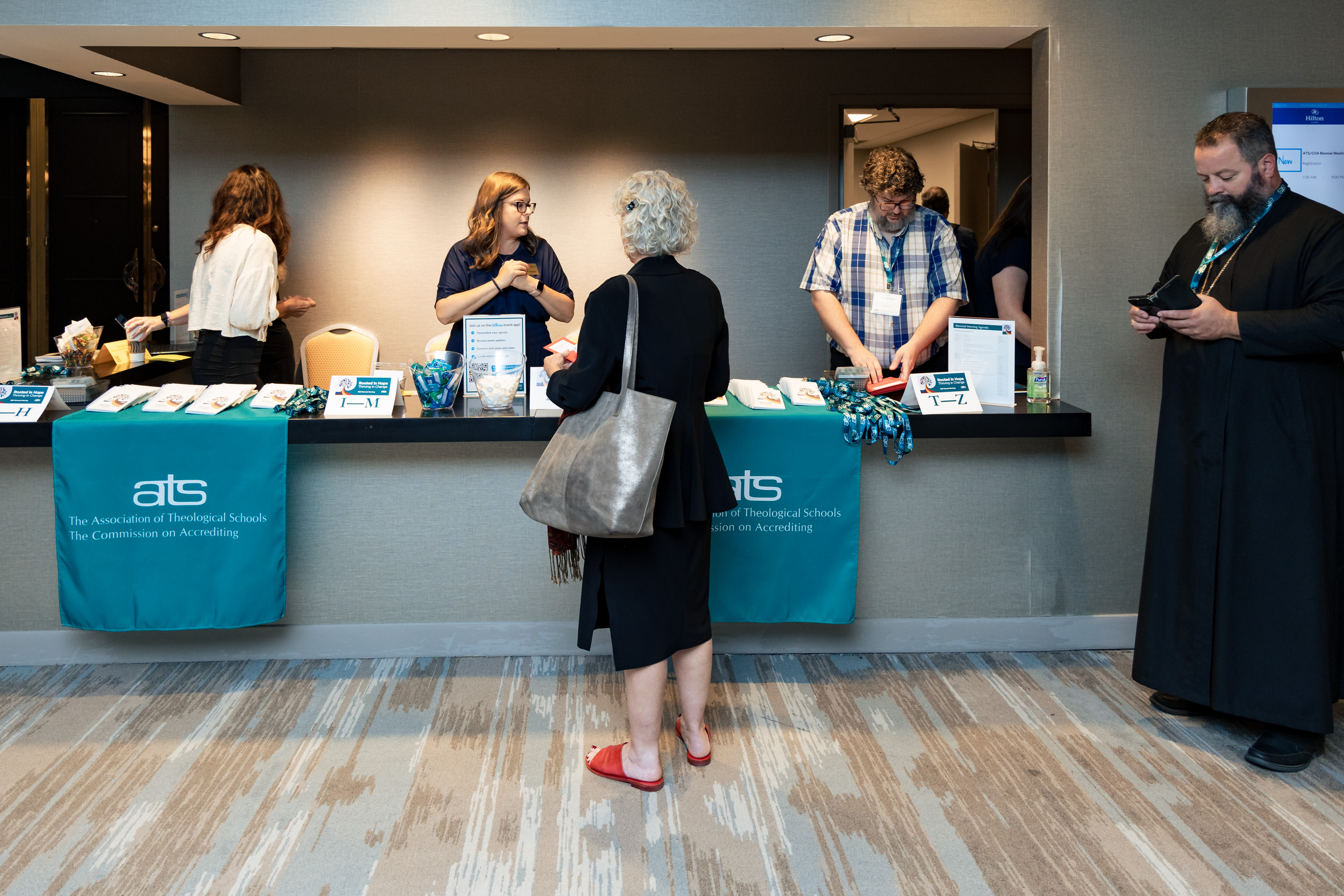
Article Image 1: ATS staff work the registration desk at the 2024 ATS/COA Biennial Meeting held in Atlanta.
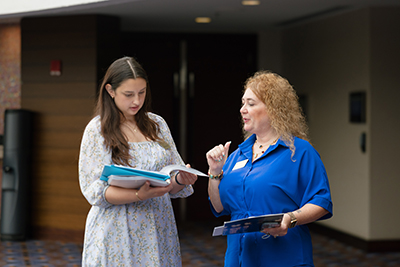
Article Image 2: Saren Williams (left) and Monica Laughery (right) confer at the 2026 ATS/COA Biennial Meeting held in Chicago.

Chelsea Brooke Yarborough is
associate director of Leadership Development
at The Association of Theological Schools
in Pittsburgh, Pennsylvania.